Why Domestic Ghosts?
Domestic Ghosts is a portrait project exploring the hidden emotional lives of men who are expected to be strong, silent and unshakeable.
Trigger Warning: This article contains mentions of suicide.
After I finished my RNLI portrait project in 2024, I was looking for something new. A new project to sink my teeth in to, but I wanted it to be something that had more meaning for me. Whilst my RNLI project was professionally fulfilling - I photographed 110 volunteers for the 200th anniversary of the organisation - which was a great experience that tested and stretched my ability. However, it didn’t really fulfil me creatively. My original vision was somewhat altered by the organisation and it became more formulaic than I intended. A lesson in communication of your vision, I suppose.
However, after this experience, I told myself that my next project would be entirely for me. That I would have complete control over the images I made, the way that I made them and the way that I communicated what I was trying to say.
I pondered things for a while, aimlessly drifting along, trying to almost fall upon an idea. Portraiture is my love and I knew that I wanted the project to be a portrait project. But I’m not one of these photographers who can just approach people in the street. Although, to find subjects that is probably the easiest method. I think that it is also a pretty cliched approach now and social media is saturated with “stranger” portrait projects. As great as some of that work is, it really wasn’t what I wanted to do. So I just carried on, plodding along taking landscape and seascape type images locally and trying to force them into some kind of something.
Ironically, I did fall upon the idea for Domestic Ghosts, but it came from the darkest of places. It came from the suicide of a young man called Craig Ainsworth.
Craig was a former Royal Marine, who after leaving travelled all over the world and worked as a Close Protection operator for some very high profile celebrities. On the surface, you’d think that Craig was living a great life.
Whilst he was still alive, Craig added me as a friend on Facebook, seeing we had a lot of mutual friends from the Marines, I accepted. But I didn’t know Craig, we’d never met and I never reached out to him to say hello. Part of me wonders now, if he was reaching out to guys he didn’t know in an attempt to make a connection with someone that might let him pour out his pain to a stranger. I’ll never know the answer to this question of course.
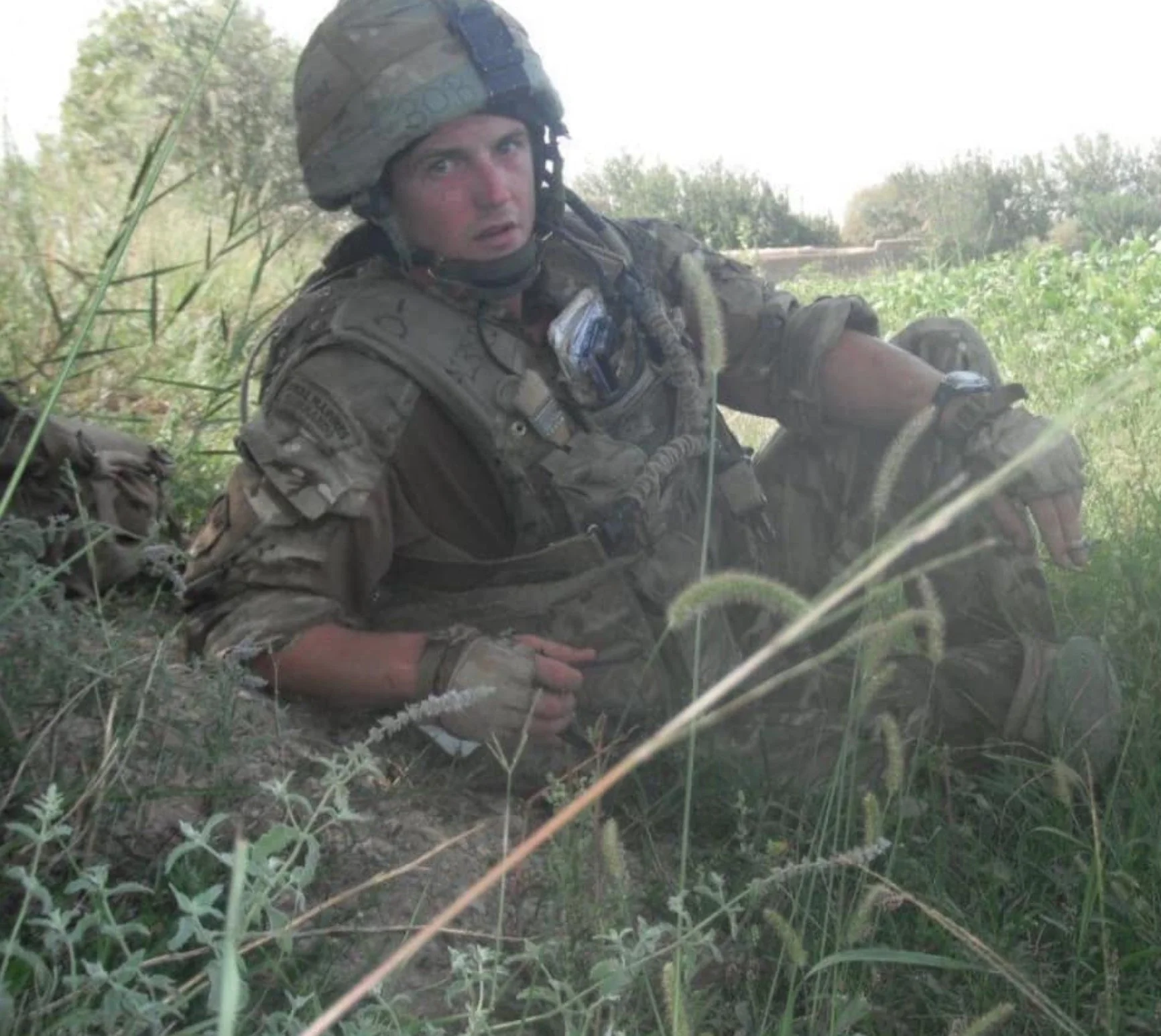
Craig Ainsworth - image taken from Facebook.
Some months later, I saw the news on Facebook that Craig was missing and then, tragically that he had taken his own life. Although I never met Craig, I felt pretty crushed by his death. The loss of anyone to suicide is tragic, the thought that, that person felt that the only way out was to take their own life, is devastating and is all too common. He was a young man who seemed to have it all, but was hiding this dark, dark pain. He was hiding that away from everyone, smiling and telling people he was fine.
And that got me thinking… why do we do that? Why do men struggle so much to talk about their pain, their stress, their anxiety?
Craig’s pain came from PTSD from experiences in Afghanistan and losing 11 friends to suicide in the space of 16 months, but so many men’s pain comes from day to day life. From money trouble, from divorce and broken relationships, from stress about how they’re going to provide for their families. It can come from anywhere, everyone’s experience is different, but no one’s experience is worth any more or less than someone else’s.
But if you ask those men how they are, 9 times out of 10, the answer would be “I’m fine”.
There’s a fear of judgment, of being seen as weak, for admitting that you’re in pain, that you’re struggling. That taboo has been created by society, for years, men have been taught that “boys don’t cry”. That boys just get on with it. The trouble is, those boys become men who keep it all locked up and become fathers who teach their sons the same lessons.
Men are human beings too, we are emotionally complex and life is hard. So why is it not expected that sometimes that hardship becomes too much for us?
So many men will live with stress and anxiety, but never say a word to anyone. They’ll bottle it up, keep it down, escape on their own in a vain attempt to try and “deal with it”. But that can only last so long, eventually, it’ll catch up with you. Those demons will become too much if you stay silent and eventually, if you let those demons live with you too much… they’ll drag you down. Just like they did to Craig and to so many others.
This problem became the basis for Domestic Ghosts. I wanted to meet men who were seen by society as being “masculine” and to explore the expectations that come with that. The idea of a man who is closed off, strong, stable, dependable… emotionless perhaps. I wanted to photograph them in that context and create images that create that expectation of that person.
I then wanted to enter into a space where those men allowed themselves to feel vulnerable, into the places where they went to offload their stress. The idea being to try and show those seemingly, masculine men in a gentler light.
But the overarching question being: “Why do these men feel that they have to escape on their own to deal with their problems?” “Why don’t these men speak up?”
Because, we are not trained to… we are not expected to. We are emotional ghosts in our own spaces. We just get by.
My ultimate aim with this project was to start conversations with men about their mental well being, to dig into why they feel they have to escape and to try and understand something about the psyche of modern men. My feeling being, that if this project can change the mindset of even one man, then there has been a positive outcome.
As the project is developing, it is really becoming less about the photography and so much more about the men and the wider issue. It has introduced me to some really great men and has elicited some really amazing and deep conversations with total strangers. The openness that these men have showed me has been astounding and it has made me think, that actually men are more likely to talk to strangers as the fear of judgment is diminished.
It has also bred some ideas of how to take this further, of other ventures I could embark upon, that are not photography related. Ventures for men that don’t carry the label of a “mental health support group” as I think that comes with a stigma that is off putting to a lot of men. But I believe that men need spaces they can go to, to feel free and un-judged. So watch this space if you’re based in Exmouth or the surrounding area.
I really hope that this project can shed more light on the issues that men face in the modern world and can go someway towards changing our mindset. Let’s always remember than being strong, doesn’t have to mean being silent.
If you’d like to take part in this project, then please get in touch with me via the button below. Let’s talk first and make images second.
If you or someone you know is struggling then there are plenty of organisations out there that can help, so please reach out… or if it is easier, just go for a drink with a mate and tell him all about it. If he’s really your mate, he will be there for you and he won’t judge you. The hardest part really is admitting you’re not ok, once you’re past that, it gets easier.
The Samaritans - www.samaritans.org - 116 123 (Free phone)
Mind - www.mind.org.uk - 0300 102 1234